
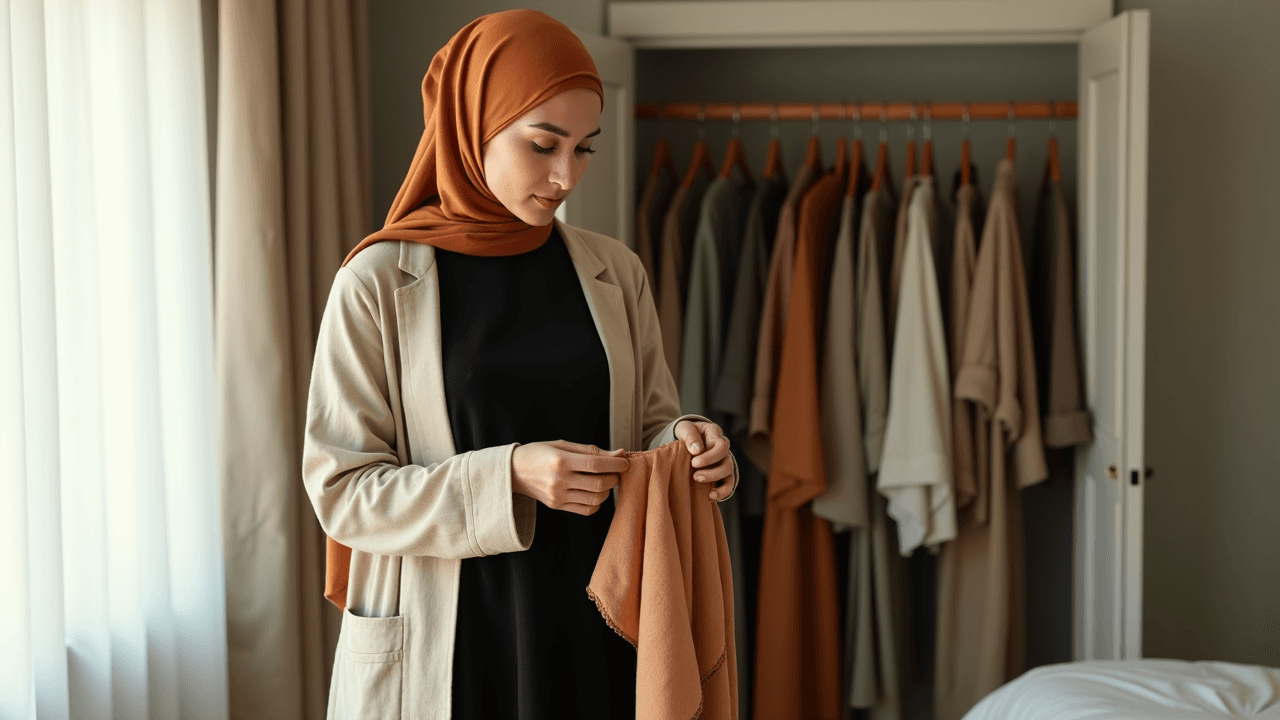
A black crepe midi dress from Inayah, purchased five years ago, has been worn to work approximately 200 times. Its owner, a London-based marketing manager in her mid-thirties, estimates it has outlasted twelve similar dresses from mainstream retailers. The sleeves hit precisely at the wrist—no safety pins, no layering required. The neckline sits high enough for hijab without creating bulk. When the brand discontinued the cut, she spent six months searching for a replacement. Nothing matched.
This is the reality of modest wardrobe building: when a piece works, it works completely. When it doesn't, the search continues.
The Fit Problem No One Talks About
Modest fashion's growth over the past decade has expanded options significantly. Modanisa lists over 50,000 products. Mainstream retailers from H&M to Net-a-Porter now stock hijab-friendly lines. Yet quantity hasn't resolved the core challenge: finding garments engineered for coverage rather than retrofitted for it.
The difference is structural. A dress designed for modest wear accounts for hijab drape at the neckline, includes sufficient sleeve length for wrist coverage during prayer, and uses opaque fabric weights (typically 180 GSM or higher for jersey, lined construction for wovens). A mainstream dress modified with a long-sleeve layer underneath creates bulk at the shoulders and often restricts arm movement.
This distinction explains why modest dressers develop intense loyalty to specific pieces. A garment that solves multiple fit problems simultaneously—coverage, proportion, fabric weight, ease of movement—becomes foundational rather than seasonal.
What Actually Constitutes a Staple
The term "staple" gets overused in fashion editorial. For modest wardrobes, the definition is specific: a staple must function across contexts without modification.
The piece must transition from office to prayer without adjustment. It must accommodate body changes—weight fluctuation, pregnancy, aging—without losing its proportional logic. For hijab wearers, it must work with multiple wrap styles and scarf fabrics without creating competing volumes at the neck and shoulders.
Scarves themselves often anchor this equation. A neutral hijab in the right fabric—viscose jersey for daily wear, silk twill for occasions—can transform the same dress across formality levels. The scarf's weight and drape dictate how a neckline reads, whether shoulders appear balanced, how the overall silhouette falls.
This is why modest dressers often cite specific hijab-and-garment combinations rather than individual pieces. The systems interlock.
The Construction Details That Matter
Fabric weight separates modest-appropriate pieces from those requiring modification. Jersey under 150 GSM typically requires layering for opacity. Unlined woven fabrics—common in summer collections—often need slip dresses underneath, adding bulk and cost.
Sleeve construction matters equally. A straight sleeve cut at 24 inches may technically cover the wrist on a size medium mannequin. On a living body with arms in motion—reaching for overhead storage, holding a phone, adjusting a scarf—that same sleeve rides up. Modest-focused brands increasingly cut sleeves at 25-26 inches with tapered wrists to prevent riding.
Neckline engineering for hijab involves subtle geometry. Too wide, and the scarf gaps when the wearer turns her head. Too high, and the fabric bunches with certain wrap styles. The most successful modest necklines sit approximately two inches below the collarbone with minimal stretch.
These specifications rarely appear in product descriptions. Modest dressers learn them through trial, return, and repetition—which is precisely why a single well-constructed piece generates years of wear.
The Capsule as Strategy, Not Aesthetic
Capsule wardrobes have been marketed as minimalist lifestyle choices. For modest dressers, they emerged from necessity.
A narrower selection pool makes each purchase higher-stakes. A workwear capsule for a hijab-wearing professional might include: one long-line blazer with covered buttons (open fronts gap at the chest), two to three midi dresses with wrist-length sleeves, wide-leg trousers in neutral tones (easier to match with various tunics), and a rotation of layering-appropriate tops in breathable fabrics.
Each piece must multiply: the blazer over the dresses, the dresses alone on warmer days, the trousers with different tops across contexts. The mathematics of coverage reduce acceptable variations. A capsule becomes strategic compression rather than aesthetic preference.
This explains why modest fashion communities—on Reddit's r/ModestDress, in Instagram comment sections, across WhatsApp groups—share specific product recommendations with unusual precision. The coordinates include: exact size ordered, height and measurements of the reviewer, fabric behavior after washing, how the piece interacts with different hijab styles. These aren't casual endorsements. They're field reports from constrained shopping conditions.
The Plus-Size Gap
Sizing limitations compound the modest wardrobe challenge. Many modest boutiques cap at UK size 16 (US 12). Extended sizing, when available, often involves grading up standard patterns without adjusting proportions—resulting in pieces that technically fit but lose their design logic.
For plus-size modest dressers, finding a single well-fitting piece can represent months of searching. The standard fast-fashion approach—buy several options, return what doesn't work—becomes economically and emotionally exhausting when few options exist in the first place.
Brands addressing this gap—Louza, select lines at Modanisa, plus-size ranges from Torrid that happen to meet modest requirements—generate significant loyalty. The customer base isn't choosing between competing options. They're choosing between one option and nothing.
The Discovery Fragmentation
Modest fashion retail remains fragmented across small boutiques, marketplace platforms, and mainstream capsule collections. A dress that perfectly suits one dresser's needs may exist in a Dubai-based boutique she's never encountered, while she scrolls past mainstream options that require modification.
This fragmentation created the discovery problem that aggregator platforms now address. The value proposition is straightforward: search once across multiple retailers, filter by coverage requirements (sleeve length, hem length, neckline height), compare across price points. The dress exists somewhere; the question is locating it efficiently.
For shoppers accustomed to bookmarking dozens of tabs, screenshotting Instagram posts for later, and maintaining mental inventories of which brands cut which way—this consolidation represents practical utility rather than lifestyle aspiration.
What Gets Kept, What Gets Discarded
The modest wardrobe edit follows predictable patterns. Fast-fashion pieces cycle through within one to two seasons—fabric pills, colors fade, cuts fall out of proportion after washing. The price point allows replacement; the quality doesn't encourage attachment.
The kept pieces share characteristics: construction that survives regular laundering, proportions that remain consistent over time, fabric weights that maintain opacity season after season. They cost more upfront. They represent researched purchases: reviews consulted, measurements compared, return policies verified.
This isn't a moral argument for slow fashion. Most wardrobes contain both categories. But the pieces that remain through closet purges—the ones packed first when moving, kept when everything else goes to donation—tend to be the ones that solved the modest fit problem completely.
The Emotional Dimension
A garment that meets modest requirements without compromise carries meaning beyond its material construction. The first dress that fit properly—after years of safety-pinning, layering, and compromise—represents proof that such garments exist.
Modest dressers describe these pieces in specific terms: "the dress that made me feel put-together without effort," "the abaya I didn't have to think about all day," "the hijab that stayed in place through an entire workday." The emotional register isn't about transformation or reinvention. It's about resolution—the end of a search that sometimes spans years.
This explains why discontinued styles generate genuine distress. When the London-based marketer's Inayah dress stopped being produced, she wasn't mourning a garment. She was mourning the end of a solved problem, facing the prospect of resuming a search she thought was finished.
The Search Continues
The modest fashion market has expanded significantly since 2015. Investment has flowed to modest-focused brands; mainstream retailers have added covered options; digital platforms have consolidated discovery.
Yet the fundamental challenge remains: coverage requirements narrow the field. Finding a piece that works across all dimensions—fit, fabric, construction, proportion, price—still requires research, community knowledge, and often patience.
The pieces that succeed become wardrobe architecture. They're not trend-responsive or seasonally replaced. They're the foundation everything else builds around.
For modest dressers, the search for these pieces is ongoing. The satisfaction when one is found is correspondingly significant.
---
*Find modest dresses, hijabs, abayas, and swimwear across multiple shops on [ScanJab](https://scanjab.com)—one search, filtered by your coverage requirements.*