
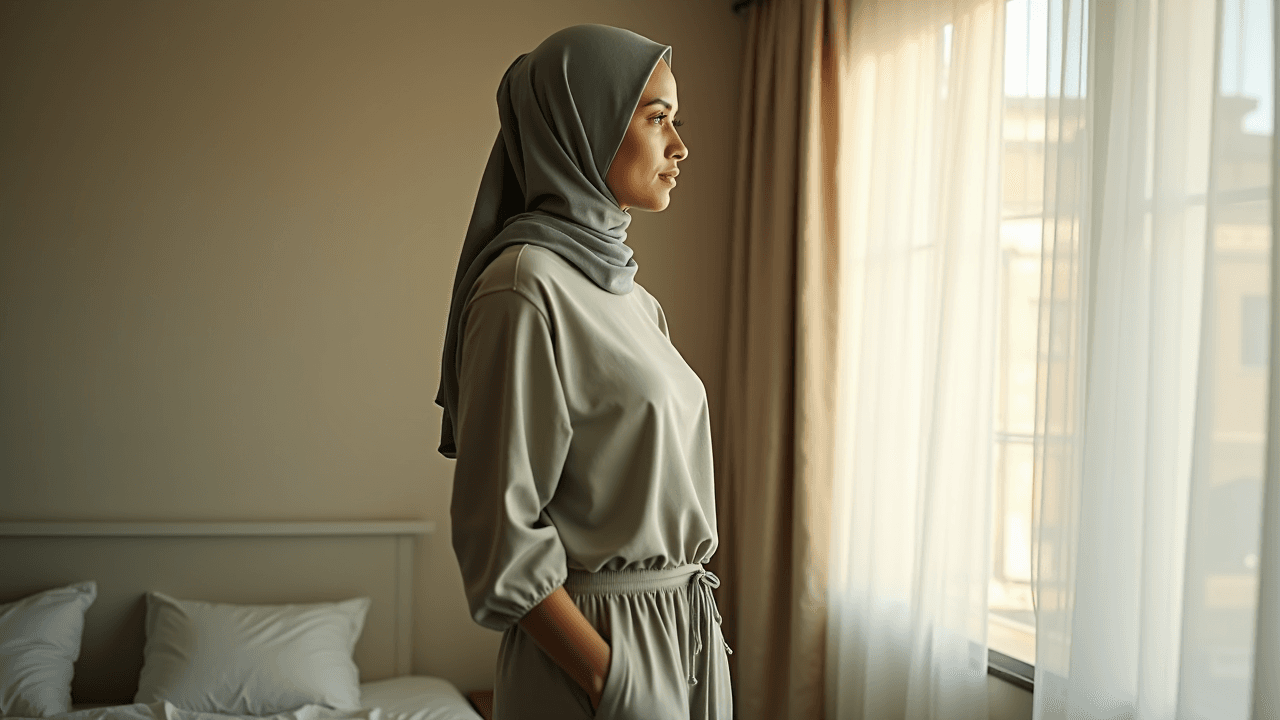
When a woman converts to Islam and begins wearing hijab, her clothing becomes a conversation before she speaks. For converts without Muslim family backgrounds, this visibility arrives without the practical knowledge many born Muslims absorb through years of observation—which fabrics drape well, how to secure pins invisibly, what works for British rain versus Gulf heat.
This creates a specific challenge: spiritual conviction running ahead of sartorial competence. The faith feels clear; the fashion remains opaque.
---
The Practical Learning Curve
New Muslims simultaneously acquire prayers, Arabic phrases, dietary guidelines, and community norms. Adding wardrobe transformation to this list proves demanding, particularly when advice varies by source and region.
Online spaces reflect this inconsistency. YouTube tutorials range from minimalist turban wraps to elaborate multi-pin styles. TikTok modest fashion content mixes helpful hauls with prescriptive commentary on what qualifies as sufficiently modest. Reddit communities like r/Hijabis field practical questions—what to wear beneath sheer abayas, how to manage hijab-related hair breakage, whether mainstream athletic wear provides adequate coverage.
The result for many converts: closets accumulating items that looked promising online but failed in practice. Polyester hijabs that refuse to stay pinned. Abayas cut for frames different from their own. Colours chosen without understanding undertones.
This trial-and-error phase carries financial weight rarely anticipated when budgeting for a new practice.
---
Family Visibility and Private Faith
For converts from non-Muslim families, modest dress often represents the moment private faith becomes public. Parents who accepted a spiritual shift in the abstract may respond differently to visible markers.
This tension typically centres on degrees of visibility. A longer hemline might pass without comment. A headscarf cannot be overlooked.
Family responses vary enormously—from immediate acceptance to years of negotiation to permanent estrangement. Some parents propose compromises: wearing hijab outside but removing it for family gatherings. Some converts accept these arrangements; others find them untenable.
What complicates these dynamics is the absence of shared reference points. A parent unfamiliar with Islamic dress may interpret a headscarf through media stereotypes rather than understanding it as one choice among many within Muslim practice. Converts often find themselves explaining not just their own decision but correcting broader misconceptions simultaneously.
---
Where Converts Actually Shop
Two names surface repeatedly in convert discussions: Aab and Modanisa.
Aab, the London-based brand, positions itself toward professional modest wear. Their midi dresses and tailored abayas suit office environments where converts may need coverage that reads as polished rather than explicitly religious. Price points sit in the mid-range—their jersey hijabs retail around £15-20, dresses typically £60-120. Sizing extends to UK 18, though some converts note inconsistency between styles.
Modanisa operates differently—a Turkish marketplace aggregating thousands of products across price points. The sheer volume helps and hinders. A convert seeking a specific item (modest swimwear, a formal gown with sleeves) will likely find options. The same convert may spend hours filtering through results of variable quality. Return logistics for international orders add friction.
Neither brand solves every need. Converts frequently report gaps: limited petite and plus sizing, insufficient options for athletic builds, modest workwear that assumes office rather than trades or healthcare settings.
Smaller specialists fill some niches. Brands focusing on modest activewear or swimwear serve converts maintaining fitness routines. Resale platforms and local exchange groups help manage the cost of wardrobe transition, particularly for those replacing entire closets rather than supplementing existing pieces.
---
Beyond the Headscarf
Modest dress for converts extends past hijab into full wardrobe reassessment.
Sleeve length becomes a recurring consideration. Wrist-length sleeves in summer months require breathable fabrics many mainstream brands don't prioritise. Layering pieces—long-sleeved undershirts, mock necks—become wardrobe staples for extending existing clothes.
Trouser silhouettes shift. Slim cuts that technically provide coverage may feel insufficiently modest in practice. Wide-leg trousers and palazzo pants appear more frequently in convert wardrobes, though finding lengths appropriate for varying heights remains difficult.
Occasion wear presents particular challenges. Modest wedding guest options from mainstream retailers remain limited, pushing converts toward specialist brands or extensive alterations. Modest bridalwear—for converts marrying or attending Muslim weddings—requires advance planning that those new to the community may not anticipate.
Practical categories receive less attention than fashion content suggests: modest swimwear enabling pool exercise, activewear for gym environments, workwear meeting specific professional dress codes while maintaining coverage.
---
The Emotional Dimension
What external observers may underestimate is the identity work clothing performs during conversion.
Some converts describe genuine grief parting with pre-conversion wardrobes. Garments carry personal history—the dress from a significant event, the jacket that marked a professional milestone. Donating these items can feel like discarding chapters of a former self, even when the spiritual decision feels right.
Others experience relief. Women who felt uncomfortable in revealing clothing before conversion—who perpetually adjusted hemlines or tugged at necklines—describe modest dress as resolving a longstanding discomfort they lacked framework to articulate.
Most converts occupy complicated middle ground: appreciating the alignment between inner conviction and outer presentation while mourning some losses and navigating ongoing uncertainty about specific choices.
---
Finding Equilibrium
Converts who've practiced for several years typically describe a settling process. They learn which brands suit their proportions, which fabrics they find tolerable across seasons, which hijab styles complement their face shapes and lifestyles.
Family relationships often shift over time, though trajectories vary. Some parents move from resistance to acceptance to genuine engagement. Others maintain permanent distance. Most land somewhere between—functional relationships with understood boundaries around religious practice.
The wardrobe transition, initially overwhelming, eventually becomes routine. Dressing stops requiring extensive deliberation. A capsule forms: reliable pieces that work across contexts, updated seasonally rather than reinvented constantly.
---
Practical Starting Points
For converts early in this process, a few patterns emerge from those further along:
Building gradually proves more sustainable than complete wardrobe replacement. Adding modest pieces incrementally—a few quality hijabs, versatile layering basics, one or two appropriate occasion pieces—distributes both cost and learning curve.
Prioritising fabric quality over quantity reduces frustration. A well-made jersey hijab that stays in place outperforms five slippery polyester alternatives.
Connecting with other converts, whether locally or online, provides practical knowledge that generic modest fashion content lacks. The specific challenges of conversion—navigating family dynamics, building a wardrobe without inherited knowledge, managing visibility in non-Muslim professional environments—differ from those facing women raised in Muslim households.
For those beginning to explore options across brands, platforms like ScanJab aggregate modest fashion from multiple retailers, allowing comparison across Aab, Modanisa, and smaller specialists without navigating each site separately.
---
The convert's modest fashion process isn't primarily about clothing. It's about constructing visible identity that aligns with internal conviction while maintaining relationships, professional standing, and personal continuity. The wardrobe is simply where these negotiations become tangible.
---
*Browse modest options across brands on [ScanJab](https://scanjab.com)—one search, many shops.*